
Controversy, Science
The ‘Heavy Water’ Connection: Fact vs. Fiction on Caluanie being related to Nuclear Grade Heavy Water (D₂O)
Oct
One of the more persistent myths surrounding Caluanie Muelear Oxidize involves claims of its relationship to heavy water (deuterium oxide, D₂O) used in nuclear reactors. This connection represents a significant misunderstanding of both nuclear chemistry and industrial chemical applications.
What is Heavy Water?
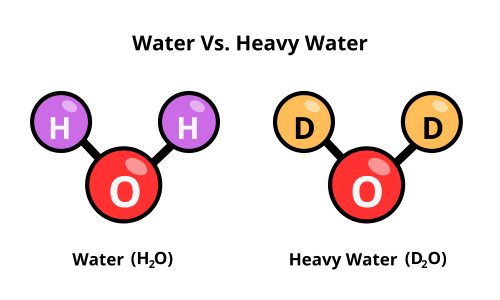
Heavy water (D₂O) is a form of water where the hydrogen atoms are replaced by deuterium, a heavier isotope of hydrogen. Its primary applications include:
- Neutron moderation in nuclear reactors
- Nuclear magnetic resonance (NMR) spectroscopy
- Metabolic and biological tracing studies

The Origin of the Confusion
The “Muelear” spelling in Caluanie’s name appears designed to suggest a nuclear connection. However, heavy water has completely different properties from the oxidizing, metal-reactive substance described as Caluanie:
- Heavy water is chemically similar to regular water
- It’s not particularly corrosive or oxidizing
- It doesn’t react violently with metals
- It’s produced through specialized isotope separation processes
Nuclear Industry Chemical Standards
The nuclear industry uses precisely characterized, rigorously tested chemicals with documented purity standards. Materials used in nuclear applications undergo:
- Extensive quality control and certification
- Neutron absorption cross-section analysis
- Radiation stability testing
- Stringent documentation and traceability
There is no evidence that any nuclear facility uses or has ever used a substance called “Caluanie Muelear Oxidize.” The name appears to be a marketing fabrication designed to lend an air of sophistication and power to a product of questionable legitimacy.
The heavy water connection is a classic example of technical-sounding misinformation that preys on public fascination with nuclear technology while demonstrating fundamental misunderstandings of basic chemistry.
